
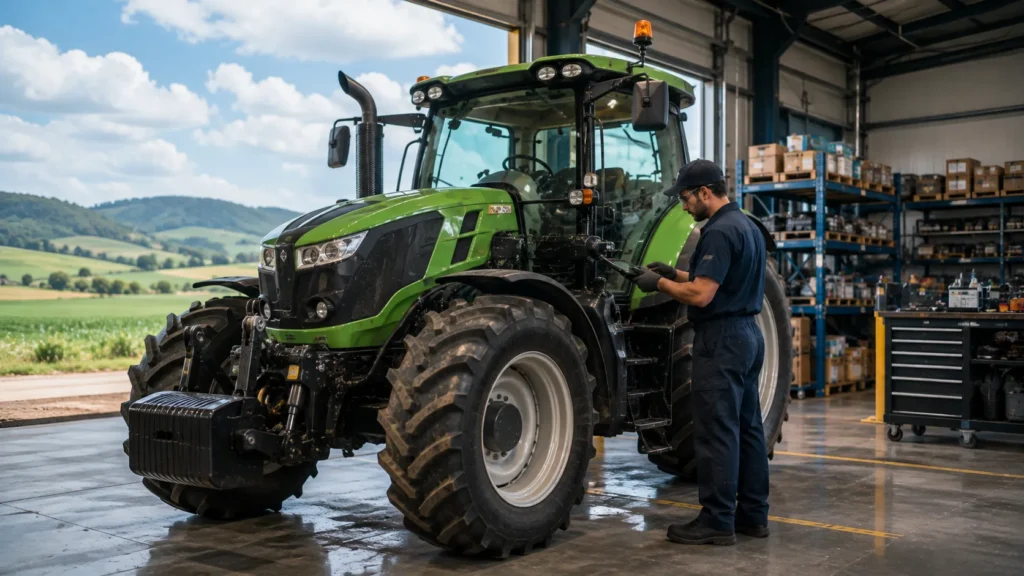
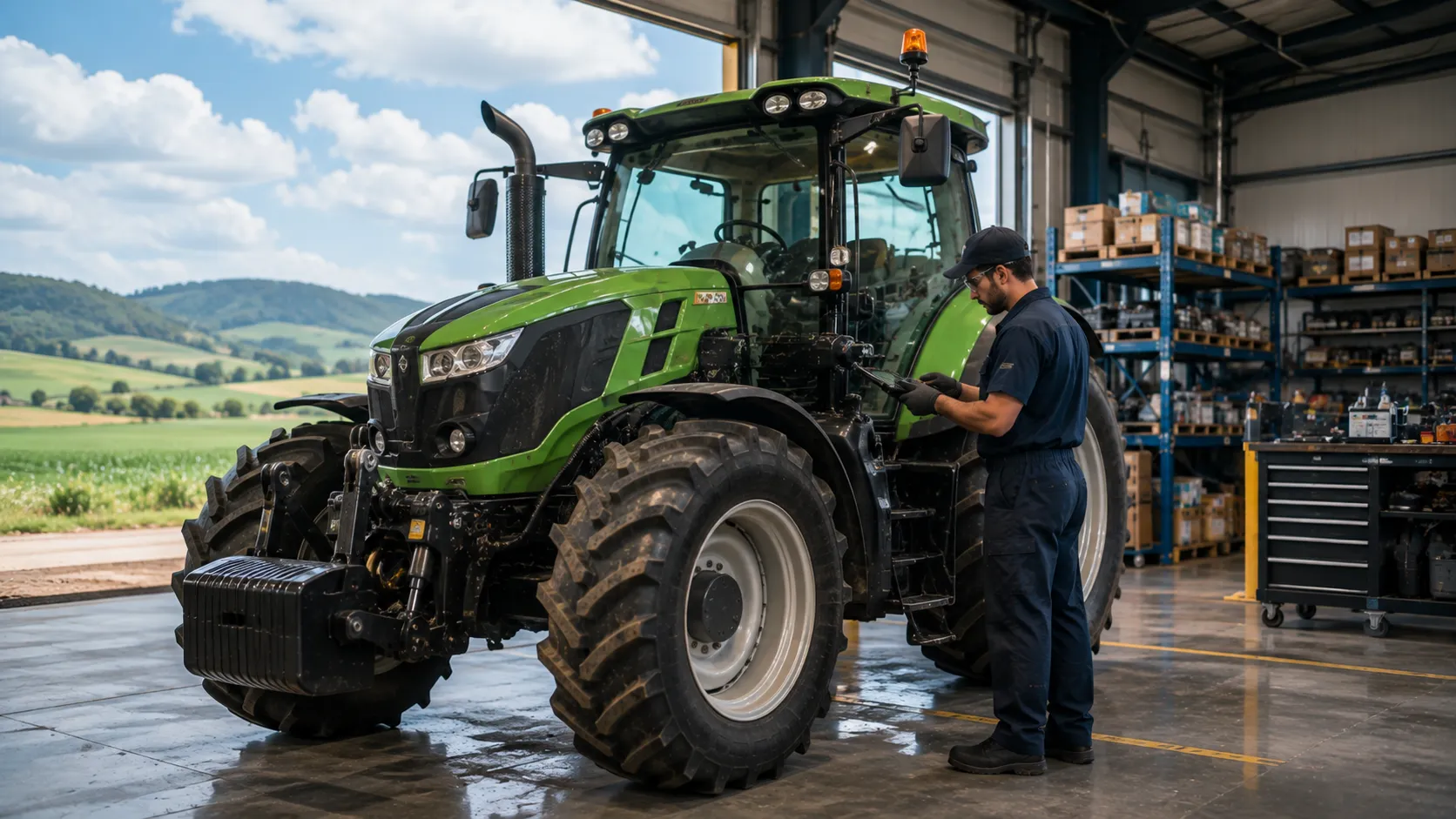
The tractor parts market in Brazil serves a wide variety of machines used in agriculture, livestock farming, construction, and other operations that depend on high-resistance equipment. When a tractor needs maintenance, choosing the right component directly influences machine downtime, equipment performance, and operating costs.
For manufacturers, workshops, retailers, distributors, and importers, buying parts is not just about finding an available product. It’s necessary to confirm the application, compare technical specifications, evaluate the manufacturing quality, and choose a supplier capable of maintaining a consistent standard.
This guide presents the main types of parts, the criteria for choosing components, and the points that Brazilian buyers should consider before placing an order.
What are tractor parts?
Tractor parts are components used in the maintenance, repair, or replacement of mechanical, hydraulic, electrical, and structural systems of tractors.
Depending on the model and application, they may include:
- Hydraulic parts
- Hydraulic pumps
- Hydraulic valves
- Lift covers
- Hydraulic lift components
- Gears
- Axles
- Key differentiators
- Transmission parts
- Engine components
- steering components
- Brake components
- Clutch parts
- Bushings and mechanical components
Each component has a specific function. Therefore, correctly identifying the part is essential before purchasing.
Main systems that use spare parts
A tractor comprises several systems that work simultaneously. Wear and tear on one component can affect other elements of the system.
Hydraulic system
The hydraulic system allows for functions such as lifting and controlling agricultural implements and operating certain equipment attached to the tractor.
The components include:
- Hydraulic pumps
- Valves
- Cylinders
- Lift covers
- Hydraulic control components
- Power steering components
These components require dimensional precision and compatibility with the specific hydraulic system.
A visually similar part may not have the same functional characteristics.
Transmission
The transmission transfers power from the engine to the tractor’s drive system.
Among the main pieces are:
- Gears
- Axles
- Key differentiators
- Bearings
- Gearbox components
In gears, factors such as the number of teeth, dimensions, profile, and material need to be considered.
A seemingly small difference can alter the fit and accelerate wear on the assembly.
Engine
The engine contains components subjected to high temperatures, friction, and mechanical loads.
Some replacement parts include:
- Pistons
- Shirts
- Rings
- Connecting rods
- Crankshafts
- Valves
- Oil pumps
- Water pumps
- Together
The choice should take into account the engine model and application specifications.
Steering and front axle
Steering components and the front axle influence the tractor’s control and stability.
They may include:
- Steering arms
- Terminals
- Bars
- Spindles
- Bushings
- Shaft components
These parts should be selected according to the model and configuration of the equipment.
How to choose tractor parts in Brazil?
Buying a part simply because it “fits a certain model” may not be enough.
Follow a few criteria before completing your purchase.
1. Identify the make and model.
Start by registering:
- Mark
- Model
- Series
- Year, when relevant
- Identification number
- Application
The same brand may use different components in different models.
Therefore, a search for “part for Massey Ferguson,” for example, may still be insufficient to identify the correct component.
2. Check the part code.
When available, the original code facilitates identification.
Compare the number with the supplier’s catalog and confirm that the reference matches the specific model.
Don’t rely solely on the code. Dimensions and application should also be checked.
3. Compare specifications
Depending on the component, note:
- Diameter
- Length
- Thickness
- Hurricane
- Thread
- Number of teeth
- Material
- Weight
- Finish
This precaution is especially important for transmission parts and hydraulic components.
4. Rate the manufacturer
Before buying large volumes, find out who manufactures the component.
Check:
- Experience in the sector
- Production capacity
- Manufacturing processes
- Quality control
- Ability to fulfill recurring orders.
- Technical support
For distributors and importers, consistency between batches is just as important as the quality of the first purchase.
OEM and aftermarket parts
The Brazilian market offers both OEM and aftermarket parts.
OEM parts are manufactured according to the Brazilian tractor partsmarket,which serves a wide variety of machines used in agriculture, livestock farming, construction, and other operations that depend on high-resistance equipment. When a tractor needs maintenance, choosing the right component directly influences machine downtime, equipment performance, and operating costs.
For manufacturers, workshops, retailers, distributors, and importers, buying parts is not just about finding an available product. It’s necessary to confirm the application, compare technical specifications, evaluate the manufacturing quality, and choose a supplier capable of maintaining a consistent standard.
This guide presents the main types of parts, the criteria for choosing components, and the points that Brazilian buyers should consider before placing an order.
What are tractor parts?
Tractor parts are components used in the maintenance, repair, or replacement of mechanical, hydraulic, electrical, and structural systems of tractors.
Depending on the model and application, they may include:
Hydraulic parts
Hydraulic pumps
Hydraulic valves
Lift covers
Hydraulic lift components
Gears
Axles
Key differentiators
Transmission parts
Engine components
steering components
Brake components
Clutch parts
Bushings and mechanical components
Each component has a specific function. Therefore, correctly identifying the part is essential before purchasing.
Main systems that use spare parts
A tractor comprises several systems that work simultaneously. Wear and tear on one component can affect other elements of the system.
Hydraulic system
The hydraulic system allows for functions such as lifting and controlling agricultural implements and operating certain equipment attached to the tractor.
The components include:
Hydraulic pumps
Valves
Cylinders
Lift covers
Hydraulic control components
Power steering components
These components require dimensional precision and compatibility with the specific hydraulic system.
A visually similar part may not have the same functional characteristics.
Transmission
The transmission transfers power from the engine to the tractor’s drive system.
Among the main pieces are:
Gears
Axles
Key differentiators
Bearings
Gearbox components
In gears, factors such as the number of teeth, dimensions, profile, and material need to be considered.
A seemingly small difference can alter the fit and accelerate wear on the assembly.
Engine
The engine contains components subjected to high temperatures, friction, and mechanical loads.
Some replacement parts include:
Pistons
Shirts
Rings
Connecting rods
Crankshafts
Valves
Oil pumps
Water pumps
Together
The choice should take into account the engine model and application specifications.
Steering and front axle
Steering components and the front axle influence the tractor’s control and stability.
They may include:
Steering arms
Terminals
Bars
Spindles
Bushings
Shaft components
These parts should be selected according to the model and configuration of the equipment.
How to choose tractor parts in Brazil?
Buying a part simply because it “fits a certain model” may not be enough.
Follow a few criteria before completing your purchase.
1. Identify the make and model.
Start by registering:
Mark
Model
Series
Year, when relevant
Identification number
Application
The same brand may use different components in different models.
Therefore, a search for “part for Massey Ferguson,” for example, may still be insufficient to identify the correct component.
2. Check the part code.
When available, the original code facilitates identification.
Compare the number with the supplier’s catalog and confirm that the reference matches the specific model.
Don’t rely solely on the code. Dimensions and application should also be checked.
3. Compare specifications
Depending on the component, note:
Diameter
Length
Thickness
Hurricane
Thread
Number of teeth
Material
Weight
Finish
This precaution is especially important for transmission parts and hydraulic components.
4. Rate the manufacturer
Before buying large volumes, find out who manufactures the component.
Check:
Experience in the sector
Production capacity
Manufacturing processes
Quality control
Ability to fulfill recurring orders.
Technical support
For distributors and importers, consistency between batches is just as important as the quality of the first purchase.
OEM and aftermarket parts
The Brazilian market offers both OEM and aftermarket parts.
OEM parts are manufactured according to specifications associated with the original equipment manufacturer.
Aftermarket parts are manufactured by independent companies for replacement applications.
An aftermarket part should not be evaluated solely on price. The buyer should analyze the manufacturer, the materials, the dimensional accuracy, and the controls applied during production.
For many maintenance operations, the deciding factor should be the combination of compatibility, quality, and cost-effectiveness.
ordering to specifications associated with the original equipment manufacturer.
Aftermarket parts are manufactured by independent companies for replacement applications.
An aftermarket part should not be evaluated solely on price. The buyer should analyze the manufacturer, the materials, the dimensional accuracy, and the controls applied during production.
For many maintenance operations, the deciding factor should be the combination of compatibility, quality, and cost-effectiveness.
Como avaliar a qualidade de peças para tratores?
A qualidade começa antes da peça chegar ao estoque.
Um fabricante especializado deve controlar diferentes etapas do processo produtivo.
Dependendo do componente, podem ser utilizados processos como:
- Fundição
- Forjamento
- Usinagem
- Retificação
- Tratamento térmico
- Acabamento superficial
A inspeção dimensional também é importante.
Em uma engrenagem, por exemplo, dimensões incorretas podem alterar o contato entre os dentes.
Em uma peça hidráulica, diferenças nas superfícies de contato podem interferir no funcionamento do sistema.
Por isso, compradores profissionais devem perguntar como o fornecedor controla as especificações dos produtos.
Onde comprar peças para tratores no Brasil?
A escolha do canal de compra depende do perfil do comprador.
Produtor rural
Pode procurar distribuidores ou revendedores que ofereçam peças compatíveis e suporte para manutenção.
Oficina
Precisa de variedade de componentes e rapidez na reposição.
Revendedor
Deve considerar disponibilidade, margem comercial e consistência do fornecedor.
Distribuidor
Precisa avaliar catálogo, capacidade de fornecimento, preços por volume e logística.
Importador
Deve analisar fabricante, documentação, capacidade produtiva, exportação e custo total de aquisição.
Cada perfil possui uma necessidade diferente. Por isso, o melhor fornecedor para uma oficina pequena não necessariamente será o mesmo para um distribuidor nacional.
Como reduzir o custo de compra?
Reduzir custos não significa simplesmente procurar o menor preço unitário.
Considere o custo total:
Preço da peça + transporte + impostos aplicáveis + armazenamento + instalação + possíveis substituições.
Uma peça barata que apresenta desgaste rapidamente pode gerar custos adicionais.
Para distribuidores, também é importante considerar o custo de estoque e o risco de produtos com baixa rotatividade.
Uma análise baseada em demanda histórica pode ajudar a definir quais componentes precisam estar disponíveis e quais podem ser comprados sob demanda.
Peças para tratores de diferentes marcas
O fornecedor escolhido deve oferecer informações claras sobre as aplicações atendidas.
Entre as marcas presentes no mercado brasileiro estão:
- Massey Ferguson
- New Holland
- Ford
- Mahindra
A compatibilidade deve ser confirmada para cada modelo e componente.
Não é recomendável assumir que uma peça serve para todos os tratores de uma mesma marca.
O que um bom fornecedor deve oferecer?
Um fornecedor profissional deve facilitar o processo de compra.
Procure empresas que ofereçam:
Informações técnicas
Descrição clara, códigos, aplicações e especificações.
Controle de qualidade
Processos para verificar dimensões, materiais e acabamento.
Capacidade de fornecimento
Estrutura para atender pedidos recorrentes e diferentes volumes.
Suporte comercial
Respostas claras sobre preços, prazos, embalagem e disponibilidade.
Suporte técnico
Orientação para identificar componentes e confirmar aplicações.
Para distribuidores e importadores, esses fatores ajudam a reduzir erros e melhorar o relacionamento com os clientes.
Erros comuns na compra de peças para tratores
Comprar apenas pelo preço
O menor preço não garante menor custo de operação.
Ignorar o código
Sem confirmar a referência, aumenta o risco de adquirir uma peça incorreta.
Comprar sem verificar dimensões
Peças visualmente semelhantes podem ter especificações diferentes.
Não investigar a causa da falha
Se o problema original continuar, a nova peça pode sofrer o mesmo desgaste.
Escolher fornecedor sem avaliar capacidade
Um fornecedor pode atender um pedido pequeno, mas não conseguir manter o mesmo padrão em volumes maiores.
Checklist para comprar peças para tratores
Antes de confirmar um pedido, verifique:
Critério | Pergunta |
Modelo | A peça corresponde ao modelo exato? |
Código | A referência foi confirmada? |
Dimensões | Todas as medidas estão corretas? |
Material | O material atende à aplicação? |
Qualidade | Existe controle de fabricação? |
Fornecedor | A empresa possui experiência no setor? |
Prazo | O prazo atende à necessidade? |
Quantidade | O fornecedor consegue manter o abastecimento? |
Suporte | Há atendimento técnico e comercial? |
Conclusão
Encontrar peças para tratores no Brasil exige uma avaliação que combine aspectos técnicos e comerciais. Marca, modelo, código, dimensões, material e aplicação devem ser confirmados antes da compra.
Para produtores e oficinas, a escolha correta reduz o risco de retrabalho e paradas desnecessárias. Para distribuidores, revendedores e importadores, também influencia estoque, margem e satisfação dos clientes.
O melhor fornecedor não é necessariamente aquele que oferece o menor preço. É aquele que consegue fornecer componentes compatíveis, consistentes e adequados à aplicação, mantendo qualidade e capacidade de atendimento ao longo do relacionamento comercial.
Perguntas Frequentes
Among the most commonly used parts are hydraulic components, pumps, valves, gears, shafts, transmission parts, engine components, steering and brake systems.
Confirm the brand, model, part number, and technical specifications. When necessary, consult the supplier’s catalog or technical support.
They can be, provided they are produced by specialized manufacturers and meet the application specifications.
Check compatibility, dimensions, material, manufacturing process, quality, supplier, total price, and delivery time.
Distributors and importers should look for suppliers with production capacity, a broad catalog, quality control, and suitable commercial terms for recurring purchases.
The code helps identify the correct component and reduces the risk of purchasing a part intended for another application. Even so, compatibility should be confirmed with other specifications.