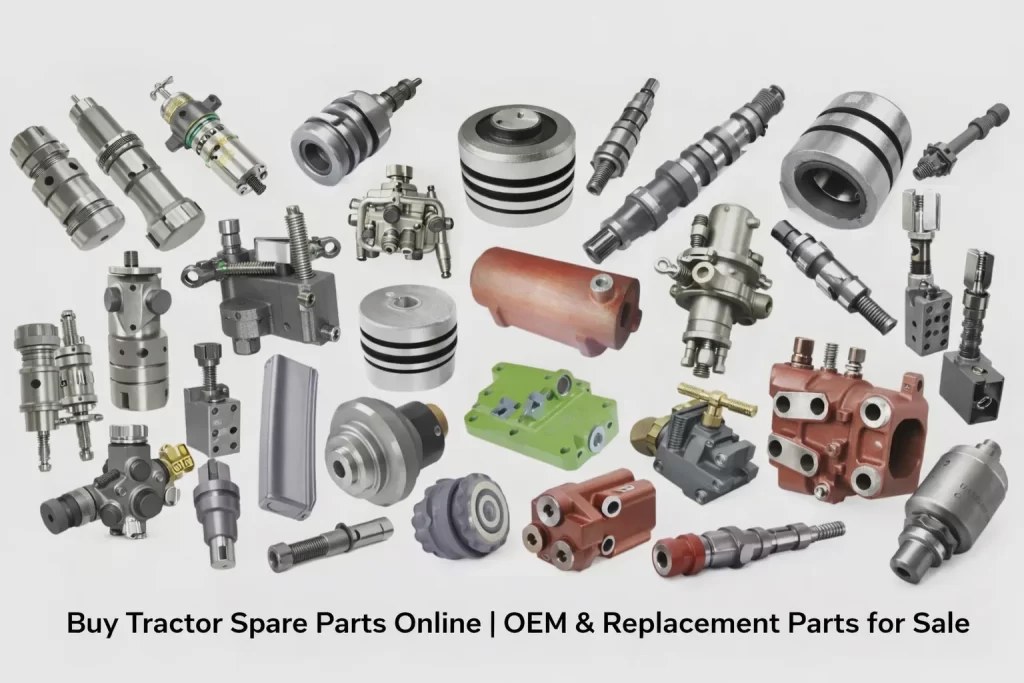
Ordering tractor parts online has become the most efficient way for dealers, importers, and farmers to source components quickly and cost-effectively. But without the right approach, it’s easy to end up with the wrong part, poor quality, or delayed delivery.
In this guide, I’ll walk you through a clear step-by-step process to order tractor parts online safely and efficiently.
Why Buy Tractor Parts Online?
Buying tractor parts online offers several advantages:
- Access to global suppliers
- Better price comparison
- Wide range of OEM and aftermarket options
- Faster procurement process
For B2B buyers, this translates into better margins and consistent supply.
Step 1: Identify the Exact Tractor Part

Before placing any order, you must identify the correct part.
What to check:
- Part name
- Part number (very important)
- Tractor model (e.g., MF 1035, Ford, Swaraj)
- Engine or transmission specifications
Pro Tip: Always rely on the part number instead of just the name to avoid mistakes.
Step 2: Choose a Trusted Supplier
Not all suppliers offer the same quality.
Look for:
- Verified exporter or manufacturer
- Positive customer feedback
- Product images and specifications
- Clear contact details
If you are sourcing globally, check suppliers from regions like:
- Brazil (cost-effective)
- Europe (premium quality)
- USA (heavy-duty parts)
Step 3: Compare OEM vs Aftermarket Parts
You’ll often choose between OEM and aftermarket parts.
OEM Parts:
- Original manufacturer quality
- Higher price
- Perfect compatibility
Aftermarket Parts:
- More affordable
- Widely available
- Quality depends on supplier
Choose based on your budget and application.
Step 4: Request Quotation (RFQ)
Before ordering, always request a quotation.
Include in your RFQ:
- Part number and quantity
- Required quality (OEM or aftermarket)
- Delivery location
- Shipping method (air/sea)
This helps you compare pricing and avoid hidden costs.
Step 5: Verify Product Details
Never skip verification.
Check:
- Product images
- Dimensions and specifications
- Material quality
- Compatibility confirmation
Ask for real product photos or videos if needed.
Step 6: Confirm Shipping & Delivery Terms
Understand logistics before payment.
Key points:
- Delivery timeline
- Shipping method
- Incoterms (FOB, CIF, etc.)
- Customs duties and taxes
For bulk orders, sea shipping is usually more cost-effective.
Step 7: Place the Order Securely
Once everything is verified:
- Issue a Purchase Order (PO)
- Confirm payment method (bank transfer, LC, etc.)
- Keep transaction records
Avoid full advance payment for new suppliers. Start with smaller orders if possible.
Step 8: Track and Inspect Delivery
After shipment:
- Track your order
- Inspect goods on arrival
- Report any damage immediately
This ensures accountability and long-term supplier reliability.
Common Mistakes to Avoid
- Ordering without part number
- Choosing the cheapest supplier blindly
- Ignoring shipping costs
- Skipping product verification
- Not checking compatibility
Avoiding these mistakes can save both time and money.
Conclusion
Ordering tractor parts online is simple when you follow a structured process. From identifying the correct part to verifying suppliers and managing logistics, each step plays a critical role.
If done right, online sourcing can help you reduce costs, expand supplier options, and grow your tractor parts business efficiently.